
Client: Google
Role: Senior UX Researcher - Contractor
Overview
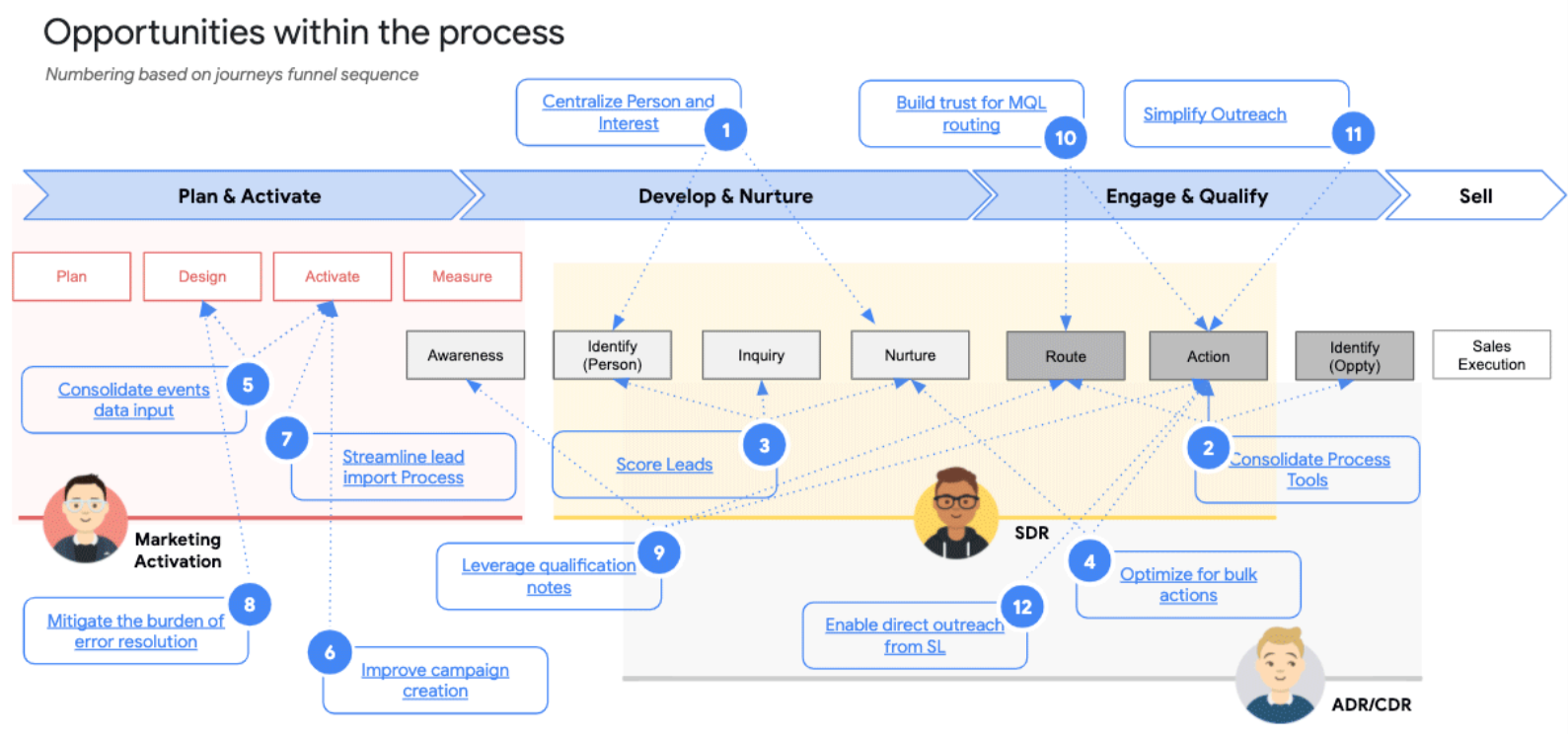
This case study summarizes a qualitative user research engagement conducted with 12 Google Cloud sales representatives to understand friction within the sales platform and identify opportunities for improvement. To protect client confidentiality, this write-up represents a partial snapshot of the work. Screens, workflows, terminology, and internal systems have been anonymized or abstracted, and implementation details are intentionally omitted.
Team and role:
Google Cloud sales teams rely on a complex ecosystem of internal tools to manage leads, execute outreach, and move opportunities through the funnel. While these systems are powerful, early signals from stakeholders suggested that day-to-day workflows were inefficient and difficult to navigate—particularly for high-volume sales roles.
Objectives
Leadership needed a deeper understanding of:
How sales representatives actually work across tools
Where breakdowns occur in the end-to-end experience
Which areas presented the greatest opportunity for improvement
Research Goals:
How sales representatives actually work across tools
Understand how sales representatives manage leads across planning, outreach, and follow-up
Identify friction points that impact efficiency, confidence, and execution
Surface opportunity areas to inform future platform improvements
Methods
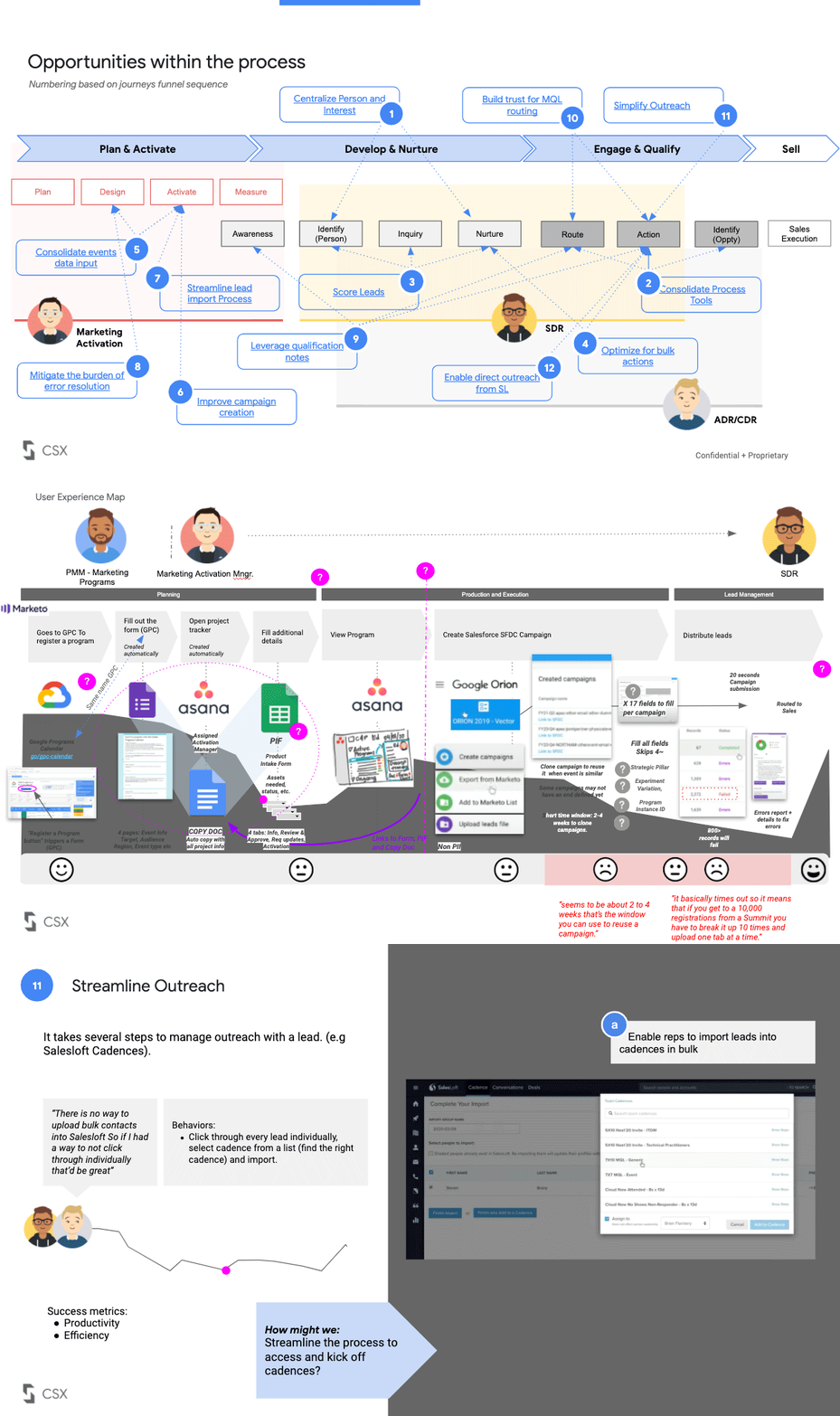
This was a qualitative research study focused on depth and context rather than measurement.
Participants
12 Google Cloud sales representatives
Roles included SDRs and ADR/CDRs
Participants represented varying tenure and experience levels
Methods
1:1 semi-structured interviews
Workflow walkthroughs using real tools and scenarios
Artifact review (screens, handoffs, and system outputs)
Experience mapping across the sales journey
The qualitative approach allowed us to uncover not just usability issues, but also mental models, workarounds, trust gaps, and emotional friction.
Key Insights (Selected Snapshot)
The insights below are a curated sample of recurring patterns, intentionally summarized to protect client confidentiality.
1. Low Trust in Lead Data
Reps questioned lead status and routing, leading to manual checks and slowed action.
2. Fragmented Tools and Context Loss
Information lived across systems, increasing cognitive load and reducing efficiency.
3. High Effort for Everyday Tasks
Routine actions like outreach setup required repetitive steps and lacked bulk support.
4. Disruptive Error Recovery
When workflows failed, next steps were unclear, breaking momentum.
5. Friction Eroded Confidence
Small inefficiencies compounded under time pressure, impacting execution and morale.
Why these Insights Matter
Taken together, these themes point to systemic experience issues rather than isolated usability problems. While each insight is presented as a standalone example, they collectively reflect broader patterns observed across roles, tenure levels, and stages of the sales journey.
This selective framing demonstrates how qualitative research can surface high-impact opportunity areas—while responsibly abstracting sensitive details.